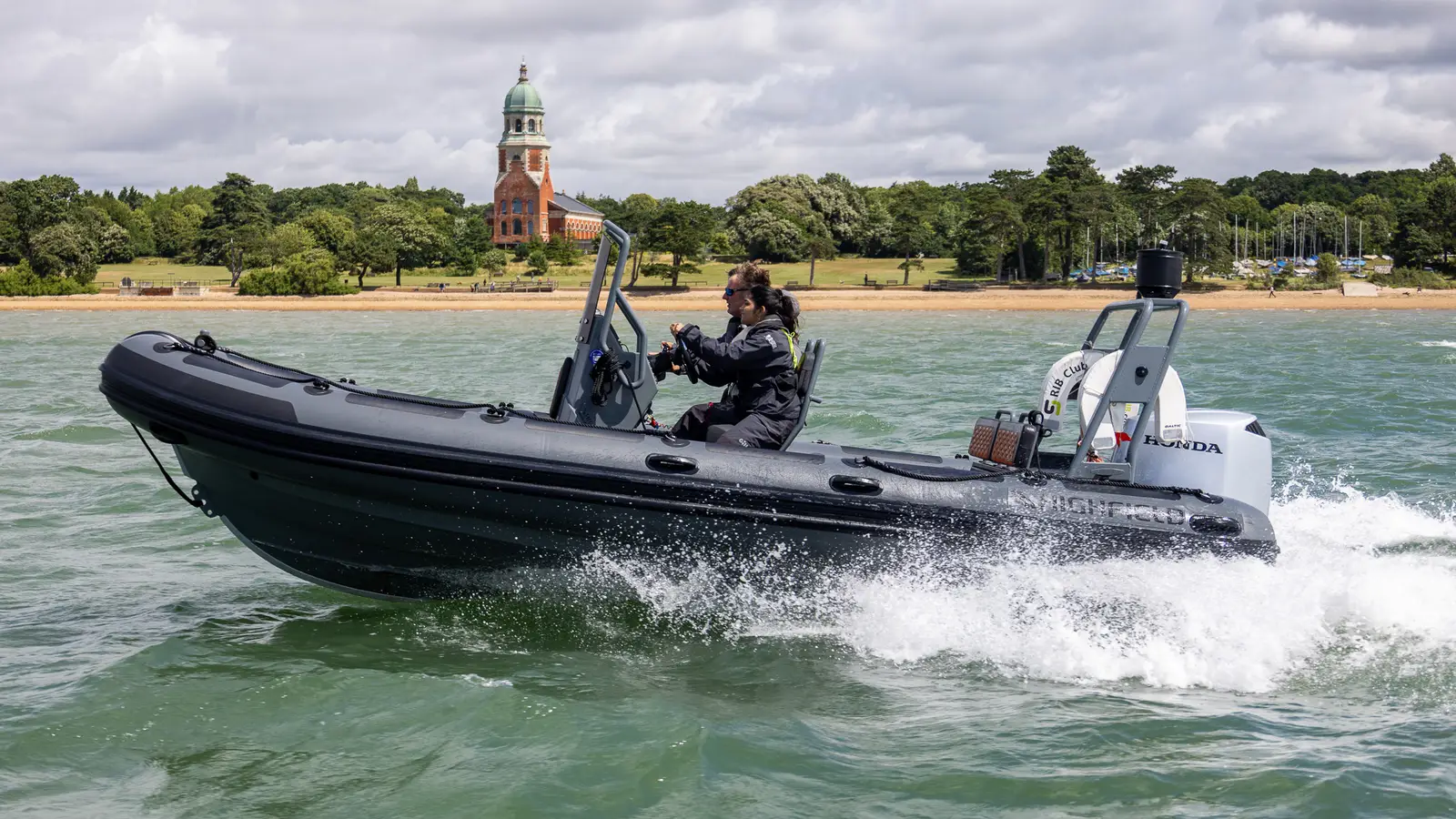

For your own boat at sea in UK waters, there is no legal powerboat licence. The law does not make you pass a test or hold a certificate before you take a powerboat out, the way it does before you drive a car on the road.
That sounds like good news, and in some ways it is. It is not, though, the same as saying you do not need one. I have spent years teaching people to handle powerboats on the Solent, and I would not put anyone afloat without proper training. Nor would any insurer or charter company you are likely to deal with.
So the answer to "do you need a powerboat licence" comes in two parts. Legally, for private use at sea, no. In practice, yes, you need to be able to show you can handle the boat, and the qualification that does that job is the RYA Powerboat Level 2.
This guide covers where a licence or certificate is required, because inland waters and trips abroad are different, what the Powerboat Level 2 is, what you can drive with it, and how to get one. It is written for owners and new buyers in the UK.
Do you need a licence to drive a powerboat in the UK?
No, not for your own boat at sea. There is no law that requires you to hold a licence or pass a test before operating a powerboat for private, recreational use in UK waters.
What that is not, is a reason to head out untrained. The absence of a legal requirement is not the absence of a need. A powerboat at planing speed in a busy estuary is a serious bit of kit, and the people around you, the swimmers, paddleboarders and other craft, are relying on you knowing what you are doing.
There are also situations where something is required, and they catch people out. The two big ones are inland waterways and taking a boat abroad. Both are covered below.

Why isn't a powerboat licence required in the UK?
Because the long-standing view across the industry, the RYA included, is that thorough voluntary training produces safer boaters than a compulsory minimum-standard licence would.
The worry with a tick-box licence is that it tempts people to do the cheapest, quickest thing to become legal, then stop. A voluntary scheme encourages people to train properly and keep building their skills over time. The UK has one of the better recreational boating safety records in the world, and that has been achieved without compulsory licensing. It is a view I share.
None of that is a reason to skip training. Train because you want to be capable on the water, rather than because a rule forces you to.
When do you need a licence or certificate?
It depends on where and how you use the boat. It comes down to three questions: are you at sea or on inland waterways, are you staying in the UK or going abroad, and is your use private or commercial. Here is the picture at a glance.
| How and where you use the boat | What the law requires | What good practice (and insurers) expect |
|---|---|---|
| Your own boat, at sea (UK) | No licence | Train to RYA Powerboat Level 2 |
| Inland waterways (Canal & River Trust / Environment Agency) | A waterway licence for the boat plus a Boat Safety Scheme certificate | Powerboat Level 2 or Inland Waterways Helmsman |
| Taking a boat abroad | An ICC, where the country requires it | Powerboat Level 2, then apply for the ICC |
| Commercial use | A commercial endorsement plus the supporting certificates | Powerboat Level 2 as the base, then up the ladder |
The right-hand column is the real-world standard. The left is the legal floor, not a recommendation.
Using your own boat at sea
For private use at sea in UK waters, nothing is legally required. You do not need a licence, and you do not need a Boat Safety Scheme certificate either. That last one applies to inland waters, not the sea, which is a detail a lot of online guides get wrong.
What insurers, berth holders and charter companies will want to see is evidence you can handle the boat. In practice, that means the Powerboat Level 2.
On inland waterways
If you keep or use your boat on the canals and rivers managed by the Canal & River Trust or the Environment Agency, the boat itself needs a waterway licence and a valid Boat Safety Scheme certificate, which is a safety check a little like an MOT. You will also need third-party insurance.
These licence the boat rather than you as the operator. The qualification most inland helmsmen take is the RYA Inland Waterways Helmsman.
Taking a boat abroad
If you are taking a boat to Europe, you will usually be asked for an International Certificate of Competence, or ICC. It is a certificate issued by the RYA on behalf of the UK Government that confirms to foreign officials and charter companies that you are competent to operate a pleasure craft.
For powerboats, you earn it by completing the Powerboat Level 2, which qualifies you to apply for an ICC valid for powerboats up to 10 metres. If your travels include European inland waterways, the rivers and canals, you will also need the CEVNI endorsement, which covers the rules of the road over there.
Using a boat commercially
If you want to be paid to drive, instruct or deliver boats, recreational qualifications on their own are not enough. You will need a commercial endorsement, again administered by the RYA on behalf of the Maritime & Coastguard Agency.
That endorsement sits on top of your qualifications and calls for extras such as a valid radio certificate, first aid, sea survival and a medical. For most small commercial powerboats, the Powerboat Level 2 is the base you build it on.
Why is the Powerboat Level 2 the standard?
The Powerboat Level 2 is the two-day RYA practical course that insurers, marinas and charter companies have settled on as proof you can handle a boat. That is why it has become the de facto "licence" even though the law does not require it. The RYA, the Royal Yachting Association, is the national governing body for recreational boating and sets the RYA powerboat scheme.
It covers powerboats up to 10 metres, qualifies you to apply for the ICC, and the certificate is valid for life. We have set out what the two days involve, and exactly what you can drive, in our full Powerboat Level 2 guide.

How do you get a powerboat licence?
You get it by taking the two-day Powerboat Level 2 course with an RYA Recognised Training Centre, which currently costs around £350. There is no entry requirement and no prior experience needed.
Under the RYA scheme, the minimum age is 12, and anyone under 16 receives an under-16 endorsement on their certificate. You spend most of the time on the water rather than in a classroom, which is how the skills stick.
We run the course on the Solent from our base at Hamble Point Marina, on real tidal water with commercial traffic and proper conditions, the kind of environment that prepares you for boating anywhere. If you have just bought a boat and would rather learn on your own vessel, we also offer own boat tuition.

Do you need a radio licence too?
If your boat has a VHF radio, then yes, there are two things you need: a Ship Radio Licence for the set, and a Short Range Certificate for you as the operator.
The Ship Radio Licence covers the equipment and is free from Ofcom. The Short Range Certificate, or SRC, is your operator's qualification, and it is a legal requirement before you transmit on marine VHF. It is worth having regardless, because in an emergency the radio is how you reach the Coastguard.
Frequently asked questions
Can you drive a boat without a licence in the UK?
For your own boat at sea, you can, legally. You should not take that as a reason to head out untrained, though. Insurers and charter companies will expect a Powerboat Level 2, and for your own safety, so should you.
Do you need a licence for a speedboat in the UK?
A speedboat is treated like any other powerboat. There is no legal licence for private use at sea, but the Powerboat Level 2 is expected in practice, and you will need an ICC if you take it abroad.
How long does a powerboat licence last?
The Powerboat Level 2 certificate is valid for life. There is no renewal and no expiry.
Do I need a licence to drive a boat abroad?
Usually, you will need an International Certificate of Competence, which you apply for after your Powerboat Level 2. For European inland waterways you will also need the CEVNI endorsement.
Is there an RYA boat licence or a motorboat licence?
There is no single document called either. When people use those terms, they usually mean the Powerboat Level 2 or the ICC, which between them cover what you need for recreational use here and abroad.
Where to start
If you have bought a powerboat, or you are about to, the sensible first step is the Powerboat Level 2. It is what the people who insure you, berth you and charter to you will look for, and it is what gets you handling the boat with confidence rather than hoping for the best.
