RYA Short Range Certificate (SRC/VHF)
The minimum qualification required by law to operate a marine VHF radio on a British-flagged vessel voluntarily fitted with one. Study online at your own pace, sit the practical exam at any RYA Recognised Training Centre.


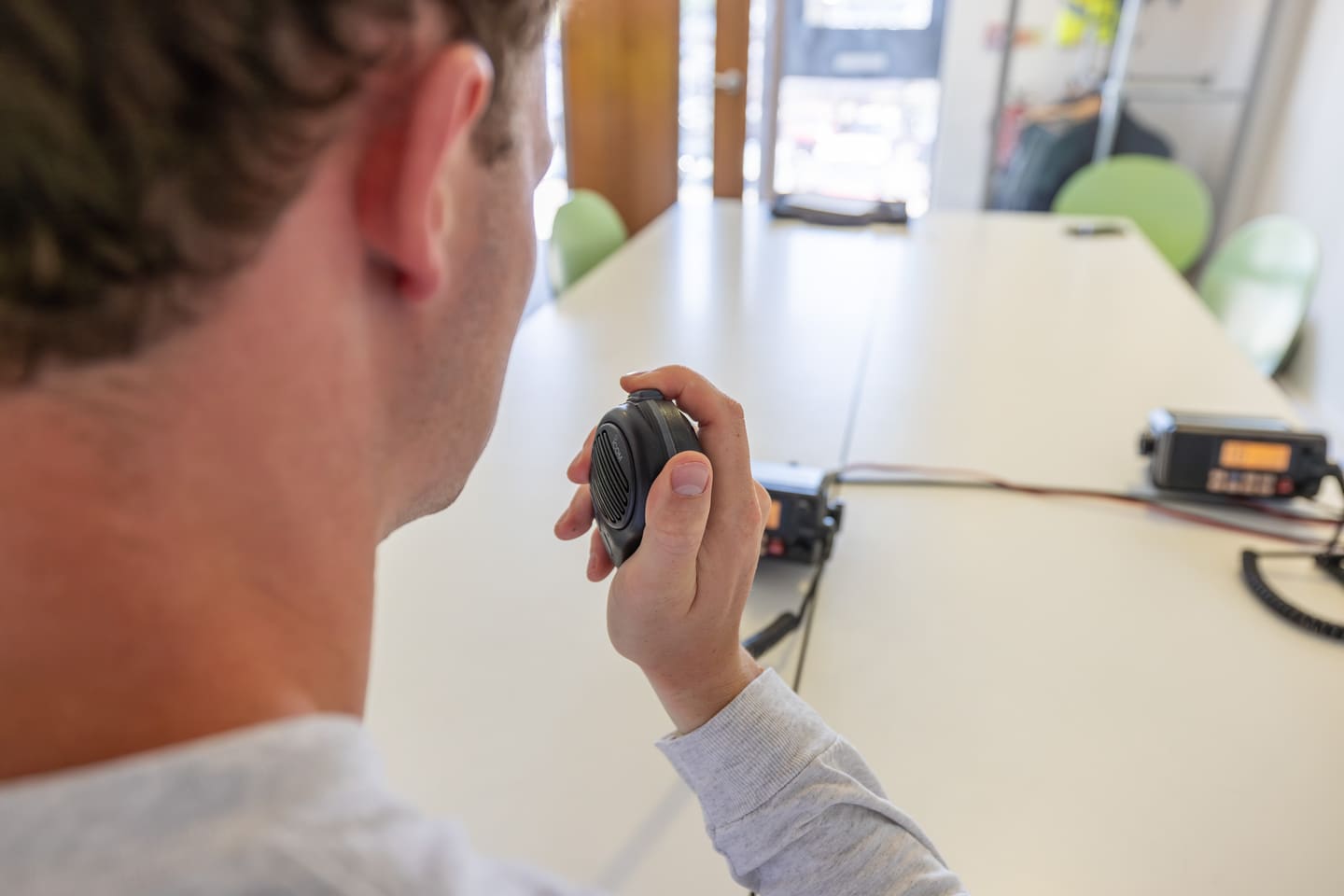
The RYA Short Range Certificate (SRC) is the minimum qualification required by law to operate a marine VHF radio on a British-flagged vessel voluntarily fitted with one. Issued by the Royal Yachting Association (RYA), the UK's national governing body for sailing and motorboating, the SRC is also a pre-entry requirement for the RYA Yachtmaster™ exams and a building block for commercial endorsement. Our online RYA SRC course covers the full syllabus at your own pace, with unlimited instructor support. The practical exam takes around an hour and is taken in person at any RYA Recognised Training Centre, including ours at Hamble Point Marina.
This page covers what the course includes, how the exam works, who it's for, and what you'll be able to do once you've passed. For the deeper background read, our complete RYA VHF Radio Course guide goes through the legal framework, the syllabus, and the radio gear itself in detail.
Who the SRC is for
Five distinct groups complete this course with us. If you fit any of them, the SRC is the right place to start.
-
Recreational sailors and motorboaters
If you have a fixed or handheld VHF on board, you need an SRC to operate it legally. The bar is the radio, not the vessel, it applies the moment you transmit.
-
Yachtmaster™ candidates
The SRC is a pre-entry requirement for the Yachtmaster Coastal, Yachtmaster Offshore, and Yachtmaster Ocean practical exams. If you're building towards Yachtmaster, get the SRC out of the way early.
-
Anyone heading for a commercial endorsement
To work as a paid skipper, instructor, or delivery crew under an RYA/MCA Certificate of Competence, you need a commercial endorsement on top of your Yachtmaster. The SRC is one of the building blocks.
-
Charter and bareboat customers
Most reputable Mediterranean and Caribbean bareboat operators require the SRC alongside your Day Skipper practical certificate. It's part of the standard paperwork pack and you don't want to be sorting it out the week before your charter.
-
Club boat skippers and crew
A growing number of sailing clubs require members to hold an SRC before taking charge of a club boat fitted with a radio. Worth checking your club's rules before assuming a previous certificate covers you.
What you'll learn
The course is built around five competencies. Each is taught from first principles and then practised until it becomes automatic.
- 01 Routine radio operation. Setting squelch, choosing the right channel, calling a marina or another vessel, switching to a working channel, and ending a transmission cleanly. The mechanics of using the radio as a tool, not just an emergency device.
- 02 Distress, Urgency, and Safety calls. Mayday, Pan-Pan, and Securité. When each is appropriate, the format each takes, and what information the Coastguard needs. The procedures are international and the script doesn't change, but you need to know it cold.
- 03 Digital Selective Calling (DSC). The single button on a modern VHF that transmits your Distress Alert with your vessel's MMSI and GPS position. We cover what to expect from a real DSC alert, how to make individual and group calls, and what to do when you receive one.
- 04 Wider GMDSS and safety equipment. Where the SRC sits in the global maritime safety system. How EPIRBs, SARTs, AIS, and NAVTEX complement VHF. What each is for and when to use them.
- 05 Rules, regulations, and licensing. The legal framework. Ship Radio Licence (free, lifetime, from Ofcom), MMSI allocation, the difference between fixed and portable licences, and the international agreements that mean your UK certificate works abroad.
How the course works

Part 1: Online study
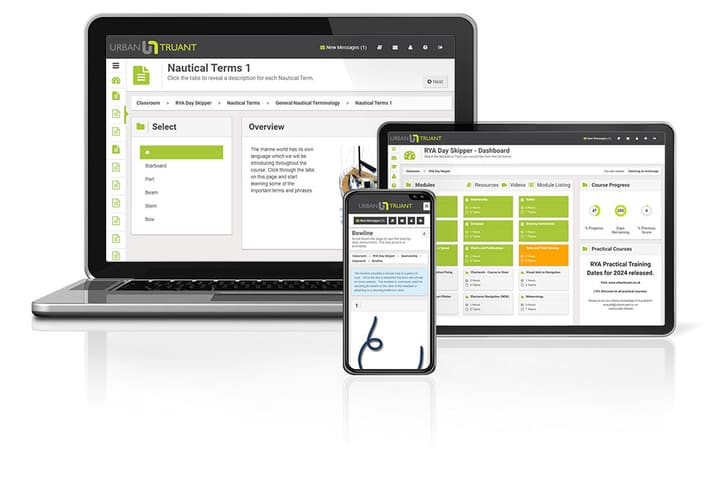
Once you book, you'll get your RYA Interactive login. The course is delivered through a mix of interactive modules, radio simulator exercises, and short video segments. Allow 6-8 hours of study time total, spread however suits you. You can work through it in a long weekend or stretch it over a month.
You complete a short online knowledge assessment at the end of the syllabus. This is not the formal exam, it's a readiness check to confirm you're ready for the practical.
Part 2: The practical exam
The practical exam has to be taken in person at an RYA Recognised Training Centre. The RYA has over 500 of them worldwide, so you can choose one that suits you geographically. The £76 exam fee is paid directly to the RYA at the point of certification.
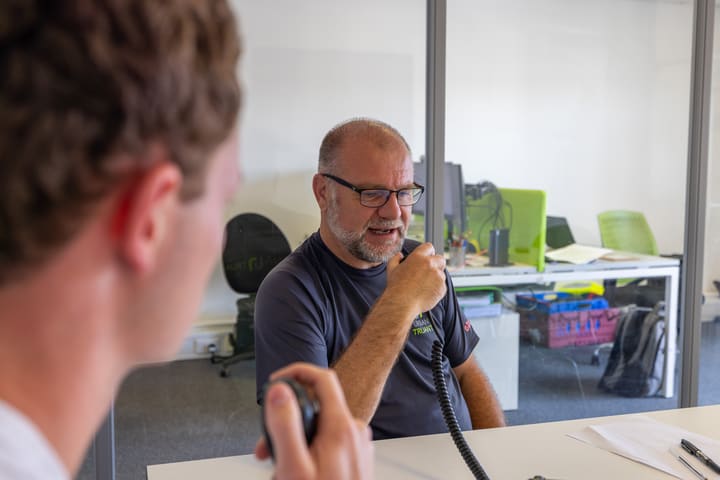
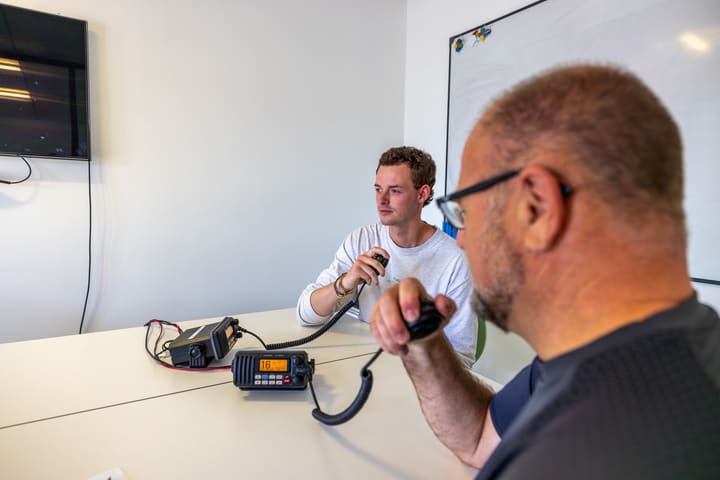
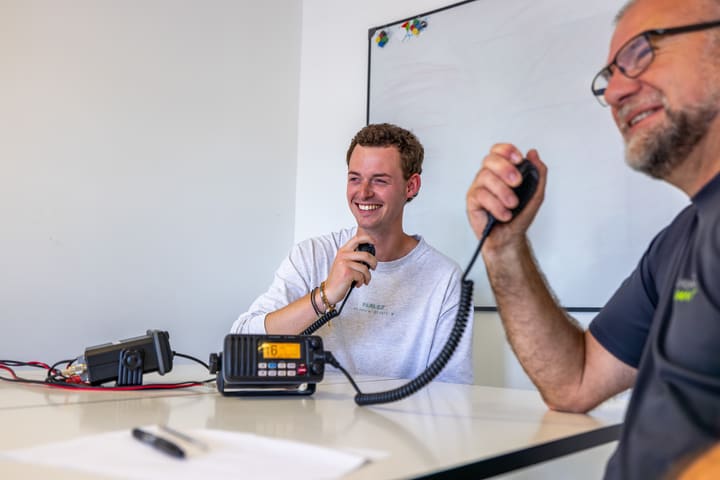
The exam itself takes around an hour and has two halves. First, a short written paper, mostly multiple choice, covering procedures, regulations, and channel allocations. Second, a practical session on a working radio set with the examiner playing the role of another station, the Coastguard, or a casualty. You'll make routine calls, simulate a distress call, and demonstrate DSC operation. The format is the same wherever you take it.
If our base at Hamble Point Marina works for you, we'll schedule the exam to fit your diary, often alongside one of our practical courses or as a standalone session. If a different centre suits you better, we'll help you find one.
What's Included
- Full RYA Interactive course access
- RYA VHF Handbook
- Unlimited instructor support
- Pre-exam readiness check
- Issued RYA certificate on completion

Why this course matters
Operating a VHF radio without an SRC is an offence under the Wireless Telegraphy Act 2006. That's the legal answer. The practical answer is more important.
A marine VHF radio is the most reliable way to call for help at sea. It works where mobile signal doesn't, it's monitored continuously by HM Coastguard, and on a DSC-equipped set it transmits your position and vessel identity at the press of a button. The SRC teaches you how to use that capability properly, so that when something goes wrong, you get the right help to the right place.
This course teaches both halves of the job. The everyday half: calling a marina for a berth, switching to a working channel, holding a normal conversation on the radio. And the half that matters most when it matters: Mayday, Pan-Pan, and Securité procedures, Digital Selective Calling (DSC), and how the SRC sits inside the wider Global Maritime Distress and Safety System (GMDSS).
Where the SRC fits in your sailing pathway
The SRC is the single radio qualification at this level in the RYA scheme. Once you have it, it's done. There's no annual renewal, no refresher requirement. The certificate is recognised internationally under the CEPT framework, so it works wherever you sail.
In terms of what comes next, the SRC pairs naturally with:
- RYA Day Skipper Theory and Practical: the next step if you want to skipper your own boat
- RYA Yachtmaster™ Theory and exams: the SRC is a pre-entry requirement
- Commercial endorsement and CoC pathways: the SRC is one of the building blocks
- RYA First Aid (also pre-required for Yachtmaster)
Why train with Urban Truant
Urban Truant is an RYA Recognised Training Centre based at Hamble Point Marina on the Solent. We deliver this course as part of a wider programme of RYA practical and theory training. Three things matter when you're choosing where to study.
-
An active training centre wrapper around the course
Like every Recognised Training Centre, the course content itself is the RYA's, delivered through RYA Interactive, the RYA's official online learning platform. What we add is the wrapper, instructor support, materials, exam preparation, and the option to take the practical exam at our Hamble base. Our instructor team includes RYA Yachtmaster™ Instructors, Examiners, and Instructor Trainers who teach the same material in classrooms and on yachts every week. Our Principal sits on the RYA Training Committee.
-
Full instructor support, no surcharge
Every student gets unlimited contact with their assigned RYA Yachtmaster™ Instructor by email, phone, Skype, or FaceTime throughout the course. There's no extra charge and no cap. If you need to talk a topic through before the exam, we'll work through it with you until you're comfortable.
-
Practical training alongside
Because we run a full RYA practical training programme out of Hamble Point Marina, theory students can step into practical training with the same team. SRC students often book a Day Skipper Practical or Competent Crew course with us shortly afterwards, and the continuity is genuinely useful.
Ready to book?
The RYA SRC course is £70, with the £76 RYA exam fee paid directly at certification. Click the button below to enrol and you'll have your RYA Interactive login within one working day.
Got a question first? Call us on 01489 250 040 or send a message and one of the team will get back to you.
Frequently asked questions
Do I need an SRC if I only ever use a handheld VHF?
Yes. The legal requirement is the radio, not the vessel. If you transmit on a marine VHF, you need an SRC. The Ship Portable Radio Licence covers handheld radios used across multiple vessels in UK waters.How much does the whole thing cost?
£70 for the course plus £76 to the RYA at certification. Total £146. No additional centre exam fee from us.How long does the SRC certificate last?
Lifetime. There's no annual renewal and no refresher requirement. Once you have it, it's done.Can I sit the exam outside the UK?
Yes. The RYA has over 500 Recognised Training Centres worldwide. Your SRC is recognised internationally under the CEPT framework, so it's accepted in most countries you'll cruise to.What's the difference between SRC and the older VHF certificate?
The SRC replaced the previous VHF-only Marine Radio Operator's Certificate in 1999, to bring UK certification in line with the Global Maritime Distress and Safety System (GMDSS) and Digital Selective Calling (DSC). If you hold an older certificate, the RYA can advise on whether it remains valid.Do I need a Ship Radio Licence as well?
Yes, if you operate a radio on your own vessel. The Ship Radio Licence covers the equipment; the SRC covers you as the operator. The Ship Radio Licence is free, lifetime, and applied for through Ofcom.Can I take the practical exam online?
No. The RYA requires the practical exam to be taken in person at a Recognised Training Centre. The course itself is online; the assessment is face-to-face.How long does it take to qualify?
The online course is 6-8 hours of study, which most students complete in a few weeks. The practical exam is about an hour. You can be qualified within a month of starting if you push, or take longer if it suits you.Will I learn DSC, or just voice procedures?
Both. DSC is a core part of the syllabus and the practical exam. Modern VHF sets are DSC-equipped and the SRC reflects that.What if I fail the practical exam?
The pass rate is high if you've done the online course properly, but you can retake the practical at any RYA centre if needed. Your instructor will help you work through whatever caused the issue first.