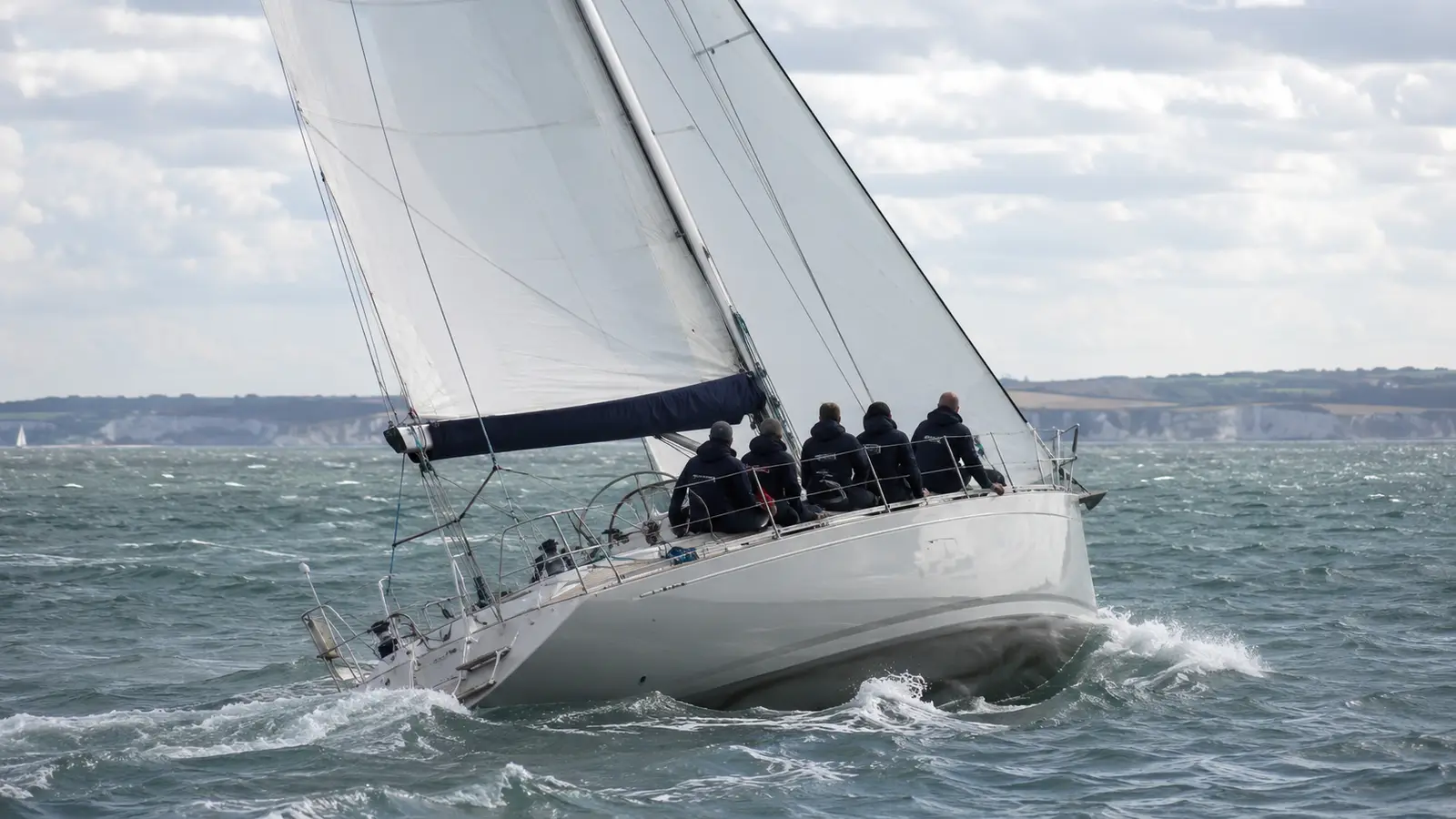

Most UK sailors learn how to sail a yacht through the RYA pathway, starting with either RYA Start Yachting (two days) or RYA Competent Crew (five days), then progressing to Day Skipper for those who want to skipper their own boat or charter abroad. The Royal Yachting Association is the UK's national governing body for sailing, and its qualifications are recognised worldwide.
You don't need any prior experience to start. Both Start Yachting and Competent Crew are designed for people who have never been on a yacht.
This guide walks through the full pathway, realistic timelines, costs, what a beginner week looks like on the water, and the questions most people have before they book their first course.
How to learn to sail a yacht: the short answer
The standard route in the UK is to take a practical course at an RYA Recognised Training Centre, supported by RYA theory. Practical courses run aboard cruising yachts with an instructor on board. You live aboard for the duration of the course, sleep on board, and progress from basic boat familiarisation to active crew work and, on later courses, skippering.
At Urban Truant, our practical courses run from Hamble Point Marina on the River Hamble. The Solent gives you sheltered water, strong tides, and easy access to a dozen harbours and anchorages. We keep a maximum of three students on board, so you spend more time at the helm and less time watching, and everyone gets a private cabin.
The RYA pathway, step by step
The RYA sail cruising scheme runs from absolute beginner to commercial skipper. Each course builds on the last. You don't have to commit to the full pathway at the start. Most people take it one course at a time.
The full pathway at a glance:
| Course | Duration | Prior experience | What it qualifies you to do | Price |
|---|---|---|---|---|
| Start Yachting | 2 days | None | Sail under instruction as crew | £559 |
| Competent Crew | 5 days | None | Active crew on a cruising yacht | £1,299 |
| Day Skipper Practical | 5 days + 40h theory | Competent Crew level + theory | Skipper a small yacht in daylight, supports ICC | £1,299 |
| Coastal Skipper | 5 days + theory | Day Skipper + Coastal/Yachtmaster™ theory | Longer coastal passages, night sailing | £1,299 |
| Yachtmaster™ Offshore | 7 days + experience | 2,500 miles, 50 days at sea | Skipper yachts up to 150 miles from a safe haven | £1,533 |
Prices from Urban Truant, June 2026.
RYA Start Yachting (2 days)
Start Yachting is the gentlest entry to sailing a yacht. Over a weekend, you get a taste of life on board, learn the parts of the boat, and sail under the guidance of an instructor. After two days, you will have steered the boat under sail and power, helped with sail handling, and understood the basics of how a yacht works.
It's the right course for anyone who wants to find out whether yacht sailing is for them before committing to anything longer. You can see dates and prices for the RYA Start Yachting course on our site.
RYA Competent Crew (5 days)
Competent Crew is the standard entry point for anyone serious about learning to sail. Over five days, you live aboard a cruising yacht and become a useful crew member: handling ropes, steering on a heading, keeping a lookout, helping with sail changes, and managing routines on board.
By the end of the week, complete beginners are confident on deck and a capable member of crew the next time they step aboard. The course covers basic seamanship, knots, boat handling, and the practical realities of life at sea. You finish with the RYA Competent Crew certificate and a logbook entry. Full details are on the RYA Competent Crew course page.

RYA Day Skipper (theory and practical)
Day Skipper is where you cross from crew to skipper. The qualification is the gateway to bareboat charter abroad and is the level most charter companies look for before they hand over the keys.
The Day Skipper qualification has two parts. The theory course covers chartwork, tides, weather, passage planning, and collision regulations. The RYA specifies 40 hours of structured learning for the theory syllabus (current at June 2026). The practical course runs over five days on the water and assesses you skippering short coastal passages by day and night.
If you want the full entry requirements, read our guide to what the Day Skipper qualification requires, or go straight to the Day Skipper practical course.
RYA Coastal Skipper and Yachtmaster™
Coastal Skipper extends what you learned at Day Skipper to longer passages, night sailing, and more challenging conditions. Yachtmaster™ is the pinnacle of the recreational scheme and a globally recognised qualification.
The RYA Yachtmaster™ Offshore certificate requires 2,500 miles of sailing experience, 50 days at sea, five qualifying passages, and a practical exam that runs up to 12 hours per candidate (source: RYA Yachtmaster scheme requirements, current at June 2026). It is not a quick badge. Most people build towards it over several seasons, often starting with Coastal Skipper.
How long does it take to learn to sail a yacht?
One season is enough to take a complete beginner from no experience to Day Skipper level, with focus and a clear plan. The Yachtmaster™ track typically takes two to five years for most people.
In 25 years teaching from Hamble Point, we have seen the complete-beginner-to-bareboat-charter pathway work for most people who commit to one season of focused training. Those who try to compress it into a single fortnight, or who spread it across years with gaps, get less from their time on board.
Three realistic timelines for the most common starting points:
Complete beginner aiming at a Mediterranean charter. Competent Crew in spring, Day Skipper theory online over the next two months while gaining practical experience on board, then Day Skipper practical in early summer. ICC application straight after. Charter-ready by late summer.
Existing crewing experience without RYA paperwork. Skip Competent Crew. Take Day Skipper theory and practical back to back. Reasonable to do both within three months.
Sailor working towards Yachtmaster™. Plan on accumulating miles across two to five seasons. Most candidates need a deliberate mile-building campaign alongside their day jobs.
Do I need to learn on a dinghy first?
No, not if your goal is to sail a yacht. Dinghies and yachts share the same physics, but they are different disciplines and ask different things of the sailor.
Dinghy sailing is excellent for understanding wind on a small, responsive boat. You feel every change immediately. But the skills you actually use on a yacht (sail trim under load, anchoring, pilotage in tidal water, life aboard) are best learned on a yacht. RYA Start Yachting and Competent Crew are designed for adults with no sailing background at all.
If dinghy sailing appeals as a separate interest, take it up by all means. As a prerequisite for learning to sail a yacht, it is not necessary.
How theory and practical fit together
Theory before practical produces better outcomes on the water, every time. You arrive at your practical course already understanding chartwork, tidal calculations, and basic passage planning. Your instructor can then spend the week building your skippering skills rather than introducing concepts from scratch.
The RYA Day Skipper theory course is the natural companion to the practical. It can be studied online at your own pace, which suits most people fitting a course around work. Both the online and classroom versions lead to the same RYA Day Skipper Shorebased Certificate. You can browse our RYA online theory courses to study at home before you sail.
What does a beginner sailing week actually look like?
A typical Competent Crew week at Urban Truant runs Monday to Friday, living aboard the yacht throughout. Sessions build progressively from boat familiarisation on day one to confident crew work by Friday.
Day one. Arrive, stow your kit, meet the instructor and the rest of the crew. Safety briefing and a walk through the yacht: lifejackets, safety equipment, and emergency procedures. Practical work on knots and rope handling alongside, then set sail for basic yacht-handling exercises.
Days two and three. Out onto the Solent. Sail handling, steering on a heading, points of sail, tacking and gybing. You move between roles so everyone gets time on the helm. Evenings are spent in harbour, often Cowes, Yarmouth, or Lymington, with dinner ashore or aboard.
Day four. Longer passage. Possibly a night sail or an early start to catch a tidal gate. You will be taking the helm in proper sailing conditions.
Day five. Wrap up the assessment, return to Hamble, debrief. Certificate issued.
You sleep in your own cabin throughout. Lifejackets, harnesses, and wet weather gear are provided. You bring layers, soft-soled shoes, and a soft kitbag.
How much does it cost to learn to sail a yacht in the UK?
Practical sailing courses at Urban Truant range from £559 for RYA Start Yachting to £1,533 for the seven-day Yachtmaster™ prep and exam, with the five-day Competent Crew, Day Skipper, and Coastal Skipper courses each priced at £1,299 (verified June 2026).
Course fees include your accommodation on board, marina fees, all training materials, and the use of lifejackets and wet weather gear. You are responsible for getting to Hamble Point Marina, and we provide the restaurant-quality food.
Theory courses are priced separately. Combined packages that bundle theory and practical work out more economical than buying each course on its own, and you can see the ways to combine theory with practical training on our packages page.
Where can you learn to sail a yacht in the UK?
The Solent is the most popular learning ground in the UK and one of the busiest in the world. It offers sheltered water, strong tides, varied harbours, and commercial traffic that teaches you to share the water responsibly.

Other parts of the UK have active RYA Training Centres too, from the Clyde to the south west. The Solent's advantage is the concentration of schools, the year-round season, and the depth of experience among instructors. Most students from outside the south coast travel to the Solent specifically for their courses.
Urban Truant operates from Hamble Point Marina on the River Hamble, with quick access into the central Solent and onward to the Isle of Wight, Poole, and the western harbours.
What do you need for your first sailing course?
Not much. Your school provides lifejackets and wet weather gear. You bring layers, soft-soled shoes that you don't mind getting wet, sun protection, and a soft kitbag (hard suitcases are awkward to stow on a yacht).
A typical kit list:
- Warm layers (fleeces, thermal base layers)
- Waterproof socks if you have them
- Soft-soled, non-marking shoes or deck shoes
- Sun hat and sunglasses with a retainer
- Sun cream
- Personal washbag
- A change of clothes for the evenings ashore
- A sense of humour
Nothing else is essential. Your instructor will tell you in advance if there is anything specific for the course.
What's between courses?
The biggest trap beginners hit is finishing Competent Crew or Day Skipper and then doing nothing for a year. Skills fade quickly without time on the water. The most effective sailors plan their progression deliberately.
A few options to keep building between formal courses:
- Mile builders. Longer passages with an instructor on board. Good for logging the qualifying miles needed for Day Skipper or Yachtmaster™.
- Club crewing. Local yacht clubs welcome new crew, especially on race nights. You learn faster sailing with people who already know what they are doing.
- Own Boat Tuition. If you have bought a boat, having an instructor aboard your own vessel for a day or two is the fastest way to build confidence specific to that boat. See our Own Boat Tuition options.
The principle is straightforward: keep sailing. The qualifications mark your progress; the time on the water builds your skill.
Frequently asked questions
Can a complete beginner sail a yacht?
Yes. RYA Start Yachting and Competent Crew are designed for people who have never been on a yacht. The courses assume no prior experience. After five days on Competent Crew, complete beginners are working as confident, useful crew members.
Do I need a sailing licence in the UK?
No. There is no legal requirement to hold a qualification to sail a yacht in UK waters. You will need an International Certificate of Competence (ICC) if you plan to charter a yacht in many European countries, including Croatia and Greece. Day Skipper is the standard route to obtaining the ICC.
What is the difference between Competent Crew and Day Skipper?
Competent Crew equips you as an active crew member on a cruising yacht: steering, handling sails, keeping watch. Day Skipper qualifies you to take charge of the boat, plan and execute passages, and skipper a yacht on day passages and short overnight trips. Day Skipper is the level most charter companies require.
What qualification do I need to charter a yacht abroad?
Most European charter companies require at least RYA Day Skipper and the International Certificate of Competence (ICC). The ICC is issued by the RYA on behalf of the UK government and is the standard recreational boating certificate in many European countries.
Can I learn to sail a yacht if I get seasick?
Yes. Seasickness is less common than many people fear, and some find that a preventative over-the-counter remedy eases the mind before they sail.
How fit do I need to be?
Reasonable general fitness is plenty. You do not need to be an athlete. Sailing a cruising yacht is more about coordination and timing than raw strength, and the boat is designed so that winches and pulleys do the heavy work. The RNLI publishes useful guidance on safety afloat for sailors of all abilities.
Where to start
The right first course depends on what you are trying to do. If you are testing whether yacht sailing is for you, Start Yachting over a weekend is the easiest commitment. If you know you want to learn properly, Competent Crew is the standard route. If a charter is on the horizon, the path runs Competent Crew, Day Skipper theory, then Day Skipper practical.
Whichever you pick, the first step is the same: book a date, turn up at the marina, and get on the water. Everything else builds from there.